

A 7 day Italy itinerary requires honesty from the beginning: you cannot see all of Italy in one week. The most common mistake travelers make is trying to. They attempt Rome, Florence, Venice, the Amalfi Coast, and Milan in seven days, arriving in each place exhausted and disoriented, spending more time navigating between destinations than actually being in them. This defeats the purpose of going to Italy entirely. A 7 day Italy itinerary works only if you abandon the idea of comprehensiveness and embrace instead the idea of depth. You choose one path through Italy—either multiple cities with a focused rhythm, or one region explored thoroughly—and you move slowly enough that you begin to understand rather than simply observe.
For seven days, we recommend two distinct approaches. The first is a tight three-city itinerary: Rome, Florence, and the Amalfi Coast, with private guides and transfers handling all logistics so that your energy stays focused on experience rather than on navigation and decision-making. The second is to spend the entire week in Tuscany—the Tuscan countryside surrounding Florence, including the hill towns and wine estates that define the region. Both work. Both require discipline. Both demand that you say no to things you want to see, so that you can say yes fully to the things you do.
At a Glance
- ✦Two route options: Rome · Florence · Amalfi Coast, or All-Tuscany depth approach
- ✦Fast-paced but not rushed; private guides and transfers eliminate logistics friction
- ✦Ideal for first-time Italy visitors and travelers with limited time
- ✦Late April through May offers pleasant temperatures; September through October offers fewer crowds
Day-by-Day Overview
Route Option A: Three Cities (Rome, Florence, Amalfi Coast)
Days 1–2: Rome — You arrive in Rome and your guide meets you at the airport with a private car. Day one is for adjustment and the Vatican: the Museums, the Sistine Chapel before crowds, an evening walk through Trastevere. Day two is for the monumental archaeology—the Colosseum, the Roman Forum—and an afternoon in a neighborhood where actual Romans live and eat. You do not see everything. You see what matters most, and you see it well.
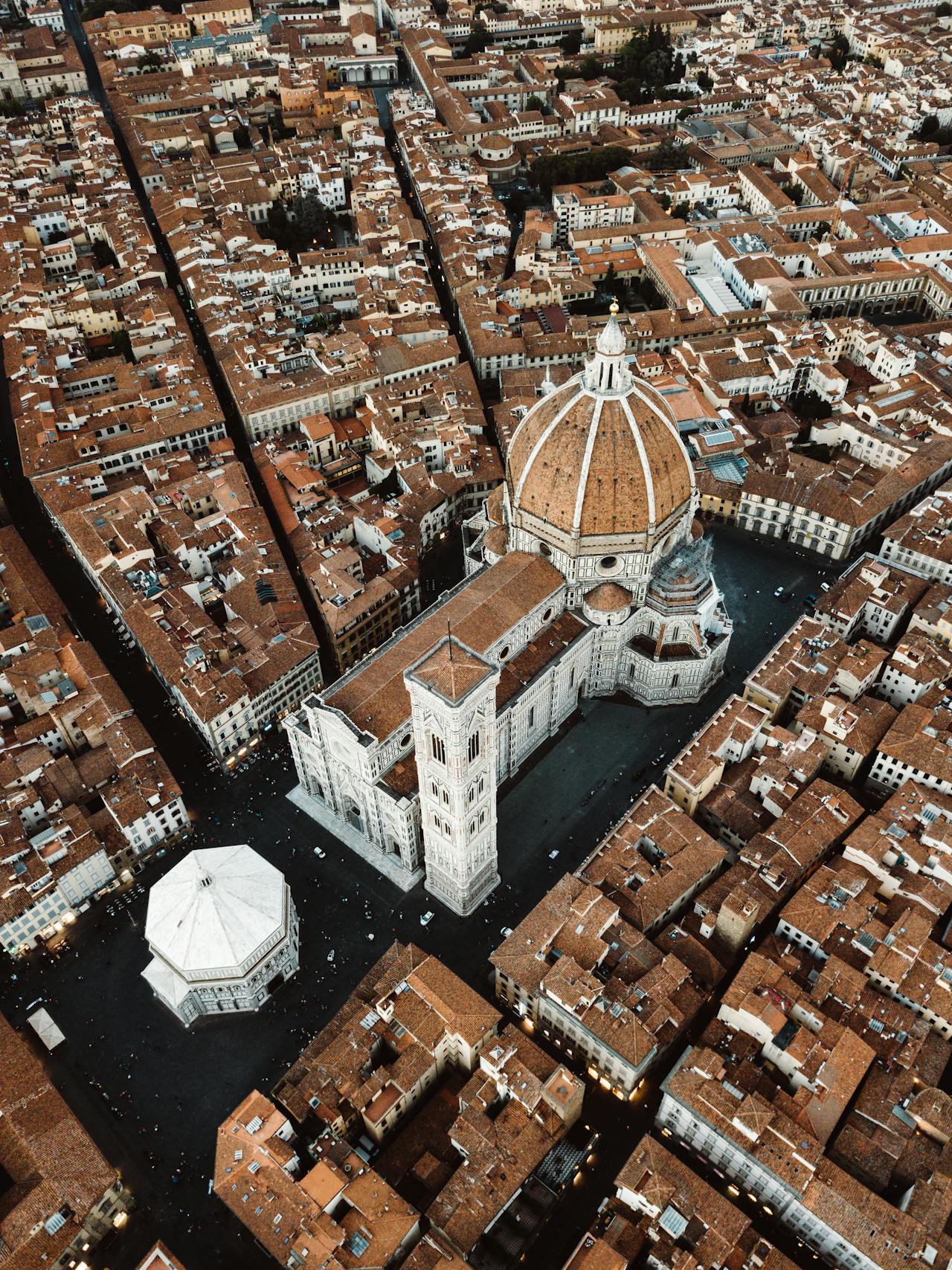
Days 3–4: Florence — You take the Frecciarossa train from Rome to Florence in the morning—1 hour and 35 minutes—and arrive mid-morning. Your guide takes you directly to the Uffizi Gallery, which opens at 8 a.m., before crowds form. Botticelli’s Birth of Venus, Caravaggio’s Medusa, the lineage of Florentine artistic genius spreads before you. Day four is for the Duomo and climbing the dome if knees permit, and for exploring the neighborhoods—San Lorenzo, Santo Spirito—where you eat dinner alongside Florentines rather than tourists.
Days 5–7: Amalfi Coast — You leave Florence early morning by private vehicle, a 4 hour and 15 minute drive toward the coast via the A1 and A3 motorways. You arrive in Positano for lunch. Days five through seven unfold slowly. Day five includes a private boat tour of the coast, swimming in coves, seeing villages from the water’s perspective. Day six is for Ravello, the town suspended above the sea, for coffee on a terrace where the Mediterranean spreads beneath you. Day seven is free—your final swim, your final meal, your final walk in a place that will call you back.
Route Option B: All-Tuscany Depth
Days 1–2: Florence — Arrive in Florence and spend two days understanding the city itself. Day one is the Uffizi at 8 a.m., before crowds form. Day two is the Duomo, the neighborhoods, the markets, and an evening walk along the Arno. You move slowly enough to begin understanding how the city’s wealth created its art, how geography shaped its power.
Days 3–5: Tuscan Countryside — You move to a countryside estate—a villa or agriturismo where you can see the landscape from your bedroom window. These three days are for understanding Tuscany as landscape and culture, not as a destination you pass through. You visit a Chianti wine estate and taste wines from soil beneath your feet. You drive through Val d’Orcia, understanding why this landscape has inspired artists for centuries. You visit a truffle market if season permits, understanding how underground economics work. You hike if you want to, or you simply sit with coffee and watch the light change across the hills.
Days 6–7: Hill Towns or More Countryside — Your final two days can be spent in the medieval towns that surround the countryside—Montepulciano, Montalcino, San Gimignano—or you can spend them back in your countryside estate, having learned that the best way to know Tuscany is to stay in one place and let it reveal itself slowly. Most travelers choose the hill towns. The smart ones stay put and go deeper into what they have already found.
Where to Stay
For a 7 day Italy itinerary, accommodation strategy is critical. In Rome, stay in Trastevere or near the Pantheon, within walking distance of restaurants and small galleries. In Florence, stay near San Lorenzo, close enough to walk to the Uffizi. On the Amalfi Coast, Positano is most romantic but also most crowded and expensive; Ravello offers equal beauty with more serenity and easier access to restaurants. In the Tuscan countryside, you must stay in the hills themselves—a restored villa, an agriturismo, a property where the landscape is your constant companion. This is non-negotiable. Staying in Florence and driving into the countryside loses the essential truth of the Tuscan experience: that the landscape itself is the primary attraction, and you should wake up inside it.
Getting Around Italy
For a 7 day Italy itinerary with limited time, private transfer is essential. Rome to Florence via Frecciarossa train is efficient—1 hour and 35 minutes, departing multiple times daily—but you will want the convenience of private car pickup and dropoff. Florence to Amalfi by private vehicle takes 4 hours and 15 minutes, traveling via A1 south toward Naples and then A3 south toward the coast. This drive is not a burden—it is the final transition, moving from the pastoral landscape into the vertical drama of the coast. Within the Tuscan countryside, private vehicle and guide are essential. The roads are small, the villages are difficult to navigate without local knowledge, and the best experiences—the wine estates, the truffle hunts, the vistas—are accessed only with a guide who knows the owner and the back roads. Train travel between Rome and Florence is reasonable; train travel beyond Florence is compromised. Invest in private transfer. The hours you save are hours you regain for actual experience.

Best Time for This Itinerary
A 7 day Italy itinerary works best in the shoulder seasons—late April through May and September through October. In May, Rome is warm but not yet furnace-hot, the Tuscan countryside is at its most beautiful with wildflowers visible in the fields, and the Amalfi Coast is warm enough for swimming but not yet crowded with summer masses. In September and October, summer crowds have thinned considerably, the Mediterranean is still warm from summer, and the light across Italy takes on a golden quality that makes even ordinary moments feel significant. Avoid July and August entirely. The heat in Rome becomes overwhelming, crowds converge everywhere, and the Amalfi Coast becomes nearly inaccessible due to congestion. A 7 day Italy itinerary in summer becomes a test of endurance rather than a pleasure of travel.
Frequently Asked Questions
Is one week in Italy worth it?
Yes, absolutely, with the important caveat that you must structure it correctly. A 7 day Italy itinerary is not worth it if you attempt to see Rome, Florence, Venice, the Amalfi Coast, and Milan. It is absolutely worth it if you choose one path through Italy and move through it at a thoughtful pace. You will leave with a foundation of understanding about Italy that will invite you back. You will have experienced real conversation with actual Italians. You will have tasted wines that connect to soil and landscape. You will have sat in a piazza at dusk and felt time slow. This is not nothing. This is everything.
What can you realistically see in 7 days in Italy?
You can see three cities well, or one region very well. You cannot see all of Italy. You cannot see eight different places in seven days without sacrificing the quality of experience at each place. The best 7 day Italy itinerary involves saying no to things you want to see, so that you can say yes fully to what you do see. Most travelers regret trying to see too much more than they regret not seeing enough. The cities and landscapes you do not visit on this trip remain waiting for a future return. This is a feature, not a bug.
One region or multiple cities — which is better for a short 7 day trip?
For a 7 day Italy itinerary, we slightly prefer the multiple-city approach (Rome, Florence, Amalfi) over staying entirely in one region (all-Tuscany), because the multiple-city route gives you breadth of Italian experience—monumental archaeology, Renaissance art, rural landscape, and coastal drama all in one journey. However, for travelers who have already seen Rome and Florence, or for those who prefer landscape and wine over cities and museums, the all-Tuscany approach offers profound rewards. There is no objectively correct choice. The correct choice is the one that aligns with what you actually want from Italy, not what guidebooks tell you that you should see.
Is 7 days enough for Rome?
For a 7 day Italy itinerary that includes multiple destinations, two days in Rome is the practical minimum. Two days allows you to see the Vatican and Sistine Chapel on day one, the Colosseum and Forum on day two, and an evening in Trastevere. Is this enough to truly know Rome? No. Rome deserves a week all to itself. But for a 7 day itinerary that includes Florence and the Amalfi Coast, two days in Rome provides essential context without consuming the entire trip. If you have already seen Rome, consider skipping it on a 7 day trip and spending the full week in Tuscany and the Amalfi Coast instead. Talk with our team about what makes sense for your particular trip, and we will help you design an itinerary that matches your actual interests and prior experience.
Explore More Private Italy Tours
If you are planning a 7 day Italy itinerary, you may want to explore our destination guides for the specific places you will visit. Read about Rome experiences, discover the Florence art museums and galleries, explore the Tuscany countryside and wine estates, and experience the Amalfi Coast drama. Each destination guide offers deeper exploration of experiences you can add to your specific itinerary.
Start Planning Your 7-Day Italy Journey
Every Italy Tour Company itinerary begins with a conversation. Tell us where you want to go, what matters most, and how you like to travel—and we will build something around that. No templates, no pressure, no obligation.
Schedule a complimentary discovery call with our team and take the first step toward an Italy experience that is entirely your own.