

A private Florence tour reveals the city as the cradle of the Renaissance—a place where Botticelli painted The Birth of Venus, where Michelangelo carved his David from Carrara marble, and where the genius of Brunelleschi still dominates the skyline. Florence is not a city you simply visit; it is a city you experience, slowly, with time to stand before the works that changed the course of human civilization.
Our private Florence tour is built around your interests—whether you want to spend three hours in the Uffizi Gallery studying the masterpieces from the 13th to 18th centuries, or you’d prefer to wander the Oltrarno neighborhood with a local artisan who still works leather and gold in the workshops where his family has worked for generations. You’ll navigate the city on your own schedule, without the pressure of a group or the fatigue of a rigid itinerary.
Florence rewards the curious traveler who moves slowly, lingers over coffee in the Piazza della Signoria, and asks the deeper questions about what you’re seeing. When you travel privately, you have the space to do exactly that.
Highlights
- ✦Priority access to the Uffizi Gallery, home to approximately 20,000 works spanning the 13th to 18th centuries—with skip-the-line entry managed by your guide
- ✦Private viewing of Michelangelo’s David at the Accademia—the 5.17-meter marble sculpture carved from a single block of Carrara marble between 1501–1504
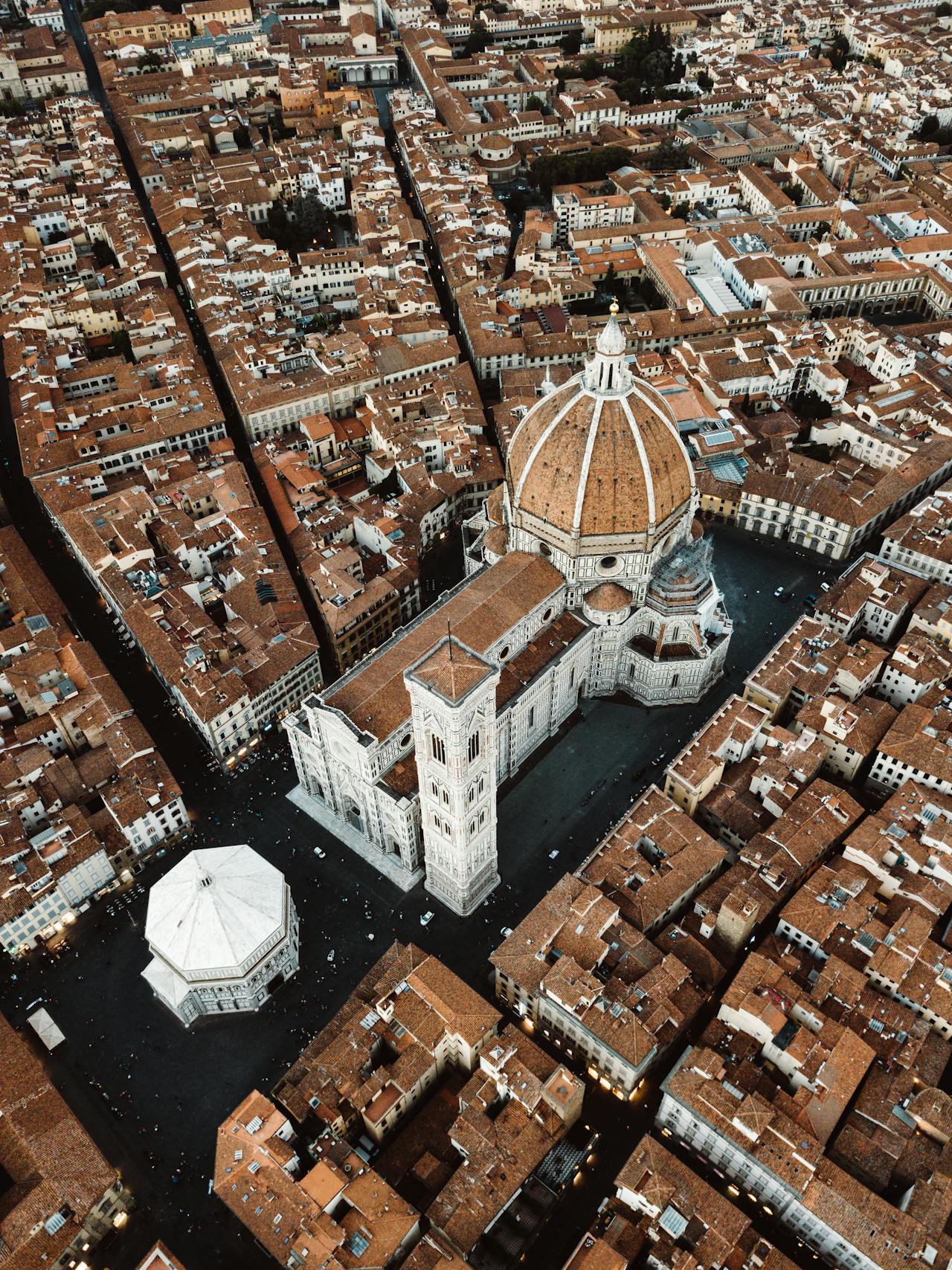
- ✦Exploration of the Duomo and climb to Brunelleschi’s dome—the largest masonry dome in the world, completed in 1436 and still a marvel of engineering
- ✦Artisan walks through the Oltrarno: watch leather workers, bookbinders, and goldsmiths in the neighborhood that has been a craftsmen’s hub for over 500 years
Why a Private Florence Tour Makes the Difference
Florence is one of the world’s most visited cities, and the crowds can obscure what makes it remarkable. When you book a private Florence tour, you trade the noise of tour buses for genuine conversation with someone who knows the Uffizi not as a checklist of famous paintings, but as a collection that tells the story of how Western art evolved. Your guide can adjust the pace based on what captivates you—whether that’s spending an extra hour with Botticelli’s La Primavera (painted around 1477–1482) or ducking into a neighborhood church where a Renaissance fresco remains largely unknown to visitors.
A private tour also gives you access to experiences that are impossible on a group tour. Visit the Accademia at opening, when you may have the gallery nearly to yourself. Take a cooking class in a local kitchen and learn to make fresh pappardelle from a Florentine cook who learned the recipe from her grandmother. Walk across the Ponte Vecchio—famous since 1593 as the bridge where only goldsmiths and jewelers trade their wares (following a Medici decree that banished the butchers who worked there for centuries)—with someone who can explain the history of the bridge and take you to a jeweler they personally know.
The rhythm of a private tour is yours to set. You control how long you linger, where you eat, which neighborhoods you explore, and whether you want to climb the 463 steps to the dome of the Duomo or sit in the Piazza della Signoria and watch the light change across the façade of the Palazzo Vecchio. This is the only way to truly know Florence.

What to Expect on Your Private Florence Tour
You’ll begin your day in the Piazza del Duomo, where the cathedral’s white, green, and pink marble façade rises before you. Your guide will walk you through the history and engineering of Brunelleschi’s dome—a construction that took 16 years (1420–1436) and weighs approximately 37,000 tonnes, yet remains unsupported by a traditional frame. If you choose to climb, the experience of ascending into the dome itself offers both a physical challenge and a moment of awe when you emerge into the cupola and see the painted interior above you.
From the cathedral, you’ll make your way to the Accademia to encounter Michelangelo’s David in the quieter hours of the day. Standing before a sculpture that took the artist four years to complete, you’ll understand why people have traveled centuries to see it. The scale is immense. The detail is impossible. Your guide will point out the marble vein that runs through David’s leg—a flaw that Michelangelo worked around with genius.
Your afternoon may take you into the Uffizi Gallery, where you’ll move through room after room of Renaissance masterworks. You’ll see Botticelli’s The Birth of Venus and La Primavera—paintings that feel almost alive in their luminosity and complexity. You’ll stand before works by Leonardo, Raphael, Titian, and Caravaggio. Your guide will help you understand not just what you’re looking at, but why these paintings matter and how to look at them with fresh eyes.
If you prefer a different rhythm, you might spend your afternoon in the Oltrarno neighborhood, crossing the Ponte Vecchio and entering the quieter, artisan-filled streets where leather workers and bookbinders still practice their crafts in workshops that have been in the same family for generations. You’ll stop at the Palazzo Pitti and perhaps explore the Boboli Gardens, where the Renaissance obsession with order and beauty manifests in perfectly composed views and classical sculpture.
You’ll end your day at a restaurant that serves traditional Florentine cuisine—perhaps bistecca alla fiorentina (thick-cut Tuscan beef), ribollita (bread and vegetable soup), or crostini with chicken liver pâté. You’ll sit with your guide or on your own, depending on what feels right, and watch the light fade from the buildings around you as the city shifts into evening.
Best Time to Visit Florence
April through June and September through October are ideal for a private Florence tour. During these months, temperatures are mild—typically in the 15–25°C range—and the light has a clarity that makes walking through the city and observing art a genuine pleasure. The crowds are present but more manageable than in July and August, and you’ll still have enough daylight hours to explore without rushing.
December through February offers a different kind of experience. The city becomes quieter, more atmospheric, and more Florentine. You’ll move through the streets with fewer tourists, and the museums feel like actual spaces rather than bottlenecks. The weather is cool but rarely harsh. If you don’t mind carrying a jacket, you’ll find that winter in Florence has a contemplative beauty that many visitors miss.
July and August are possible but require careful planning. The heat is intense, the crowds are enormous, and the Uffizi Gallery can feel more like a corridor than a museum. If you must visit during these months, book your museum entry in the early morning, plan extensive breaks in air-conditioned spaces, and consider shifting your main activities to late afternoon and evening.
Getting To and Around Florence
Florence is served by Peretola Airport (Aeroporto di Firenze), approximately 4 kilometers northwest of the city center. Direct flights connect Florence to major European cities including London, Paris, Frankfurt, and Amsterdam. Most international travelers arrive through Florence or the larger hubs of Milan or Rome, then travel to Florence by train—a journey of 2–3 hours from Rome and 2–3 hours from Milan on the high-speed Trenitalia network.
The city center is compact and best explored on foot. The Uffizi Gallery, the Accademia, the Duomo, and the Palazzo Vecchio are all within walking distance of one another. Your guide will navigate you through the medieval street layout—a maze that feels confusing at first but becomes logical once you understand that most of the major attractions sit on the north side of the Arno River. If you need to cross longer distances, Florence has an efficient bus system and a small tram line, though for a private tour, your guide will help you determine the best way to move through the city.
If you’re interested in day trips from Florence, you can visit the Tuscan countryside—the rolling hills of Chianti, the Val d’Orcia, or the villages of the Crete Senesi. Most of these are best accessed by private car with a driver and guide, a service that Italy Tour Company can arrange as an extension of your private Florence tour.
Frequently Asked Questions
How many days should I spend in Florence?
Most visitors benefit from three to four days in Florence. Two days allows you to see the major museums and monuments at a reasonable pace. Three days gives you time to linger in the galleries and explore the neighborhoods beyond the immediate center—the Oltrarno, the backstreets of San Marco, the areas around the Basilica di Santa Maria Novella. Four or more days allows for a relaxed experience, a cooking class, a half-day Tuscan countryside tour, or multiple visits to galleries you particularly enjoyed. A private Florence tour is flexible; you can add or subtract days based on what calls to you.
Should I prioritize the Uffizi Gallery or the Accademia?
Ideally, you’ll do both. The Uffizi holds approximately 20,000 works across its collection, with about 2,500 on permanent display, spanning from the 13th century through the 18th century. The Accademia is smaller and more focused—primarily devoted to Renaissance sculpture and painting, with Michelangelo’s David as its centerpiece. If you have only one day for museums, the Uffizi offers a more comprehensive survey of art history, but Michelangelo’s David is an experience you shouldn’t miss. A private Florence tour allows you to experience both without the stress of choosing.
What day trips from Florence would you recommend?
The Tuscan countryside surrounding Florence offers some of Italy’s most beautiful landscapes. A private Tuscan wine tour can include stops at estates in Chianti, where you’ll taste wine alongside food and learn about the region’s viticultural traditions. Alternatively, you might visit the Val d’Orcia, where the rolling hills feel like they’ve been lifted from a Renaissance painting. Many visitors also enjoy a truffle hunting experience in the Tuscan countryside, paired with a gourmet tasting. Explore our Tuscany private tours or book a wine tasting in Chianti to extend your Florence experience into the surrounding region.
Should I visit Florence or Rome first on my private Italy tour?
There’s no wrong answer, but many travelers find it rewarding to visit Rome first, then move north to Florence. Rome introduces you to ancient history and the grandeur of the classical world. Florence then reveals the Renaissance—the moment when that classical knowledge was rediscovered and reimagined. The progression feels natural and helps you understand the evolution of Western art and culture. That said, your private itinerary can be designed in whatever order makes sense for your flights and preferences. If you’re interested in exploring both cities, consider a Rome and Tuscany tour that includes both destinations.
Explore More Private Italy Tours
Florence is often the heart of an Italian itinerary, but it works beautifully in combination with other regions. Consider pairing your private Florence tour with a Venice and Tuscany cultural experience, or extend your time in the countryside with a Tuscan and Cinque Terre adventure. You might also add experiences like truffle hunting in the Tuscan countryside or explore the best of Italy across multiple regions.
Start Planning Your Private Florence Journey
Every Italy Tour Company itinerary begins with a conversation. Tell us what draws you to Florence—whether it’s the Renaissance masterpieces, the Tuscan landscape, the food and wine, or the sense of walking through centuries of human creativity—and we will build something around that. No templates, no pressure, no obligation.
Schedule a complimentary discovery call with our team and take the first step toward a Florence experience that is entirely your own.