
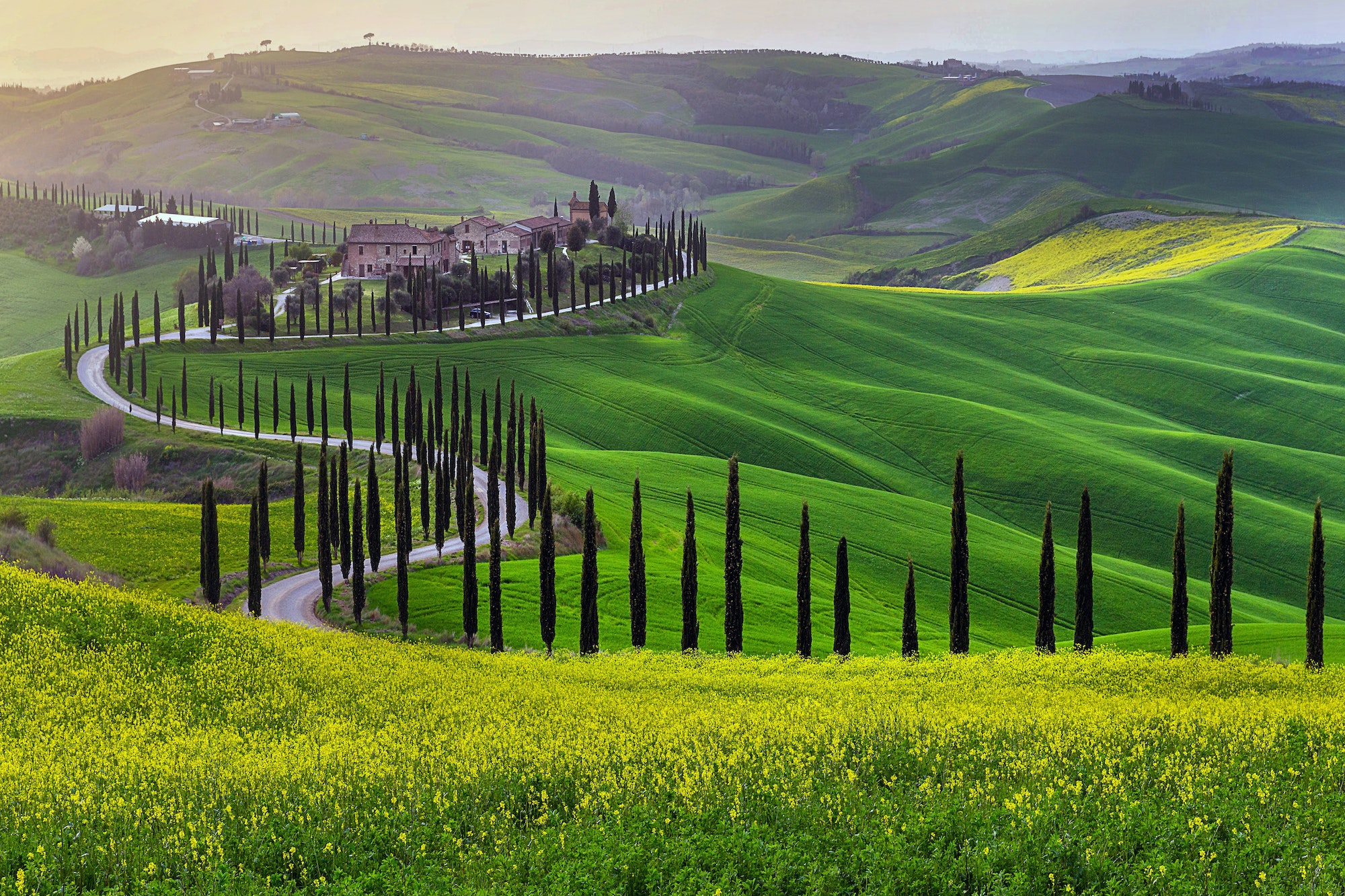
Tuscany arrives slowly. The landscape builds as you move south from Florence — the vineyards thickening, the hills steepening, the light taking on that particular amber quality that painters have been chasing for six centuries. By the time the towers of San Gimignano appear on the horizon, or the pale white roads of the Crete Senesi begin to unspool ahead of you, something shifts. The noise of ordinary life falls away. This is one of those rare places that actually delivers on what you imagined.
The Tuscany most visitors see — queued outside the Uffizi, squeezed onto a coach for a two-hour wine stop in a crowded estate tasting room — is a different country from the one a private Tuscany tour reveals. An itinerary built around you begins not with a fixed schedule, but with a conversation: what do you want to feel here? The answer shapes everything that follows, from which Chianti estates you visit to which Val d'Orcia backroad you drive at dusk.
Italy Tour Company's founders were married in Cetona, a quiet hilltop town in southern Tuscany, in 2009. This is not a place that appears on a standard tour itinerary. It is a place you know because you have spent real time in the region, earned the trust of local people, and learned which turning to take off the main road. That depth of knowledge — built across more than a decade and hundreds of private itineraries — is what travels with you into Tuscany.
The tour buses do not go to Castello di Verrazzano, a wine estate outside Greve in Chianti that has been producing on the same land since the 15th century. They do not stop at the unmarked turning above Radda in Chianti where a family opens their cellar by appointment and nowhere else, or pull into a Montalcino courtyard where a fourth-generation winemaker will pour a Brunello Riserva that never appears on their commercial list. These experiences exist — they are simply not on offer to the traveler who books a seat on a group itinerary.
A private Tuscany tour with Italy Tour Company begins with a guide who has genuine relationships in the region: with estate owners who have known them for years, with the trifolao who hunts white truffles in the Val d'Orcia every October and knows exactly which stretch of forest to work that morning, with a Sienese chef who teaches pasta in her home kitchen rather than a commercial cooking school. These are not vendor arrangements. They are the kind of connections that mean a door opens when it might not have otherwise, or lunch happens at a family table rather than a restaurant designed for passing tourists.
Beyond access, the private format puts you in control of the day's rhythm. If the Piazza del Campo in Siena — a shell-shaped medieval square that rewards more than the forty-five minutes most group tours allow — deserves another hour, it gets one. If a vineyard conversation turns into an extended barrel room tour and an unplanned tasting of last year's harvest, the afternoon rearranges itself around that. Bespoke Tuscany travel means no other travelers to consult, no fixed departure time to chase, no experience cut short because a schedule elsewhere demands it.
Tuscany is best understood as several distinct regions within one. A well-built private itinerary moves between them deliberately, giving each the space it needs rather than treating the whole region as a single backdrop.
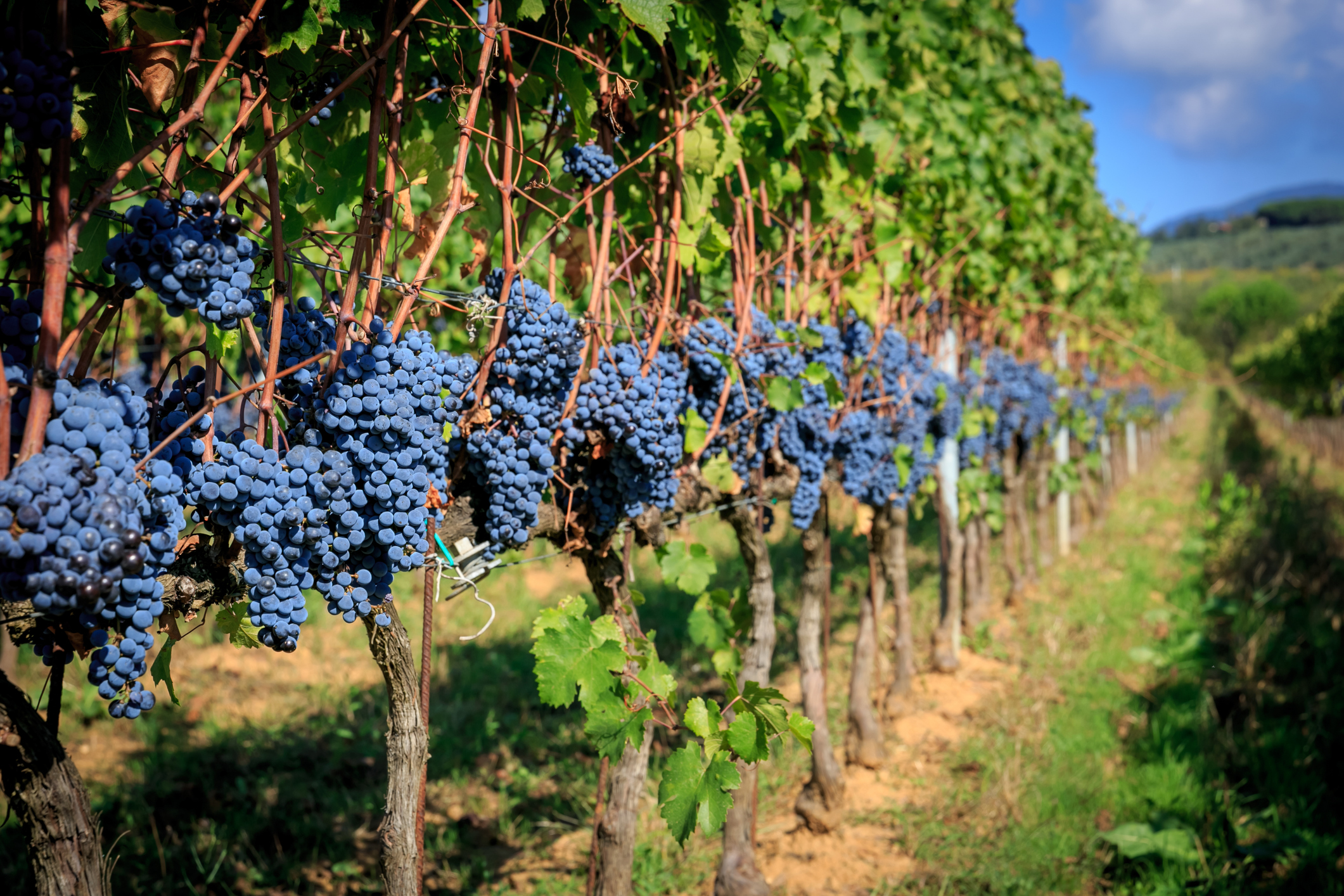
Chianti Classico and the Vineyard Roads. The SR 222 — the Via Chiantigiana — runs south from Florence through the heart of the Chianti zone, a winding road past olive groves, castle towers, and the estates that produce Tuscany's defining wine. A private visit to a family estate here is not a scripted tasting room experience. It is often a walk through the vineyard with the person who planted it, followed by a seated tasting in the cellar, followed by whatever the conversation naturally becomes. Our wine and cheese tasting at a historic Chianti estate is one of the most beloved experiences we offer — unhurried, intimate, and rooted in a landscape that has been producing wine for five hundred years.
The Val d'Orcia at Dusk. In 2004, the Val d'Orcia became the first landscape in the world to receive UNESCO World Heritage designation — recognition not of a monument or a site, but of an entire agricultural landscape shaped by the Renaissance. The conical hills, the pale clay plains of the Crete Senesi, the cypress-lined roads connecting Pienza to Montalcino to Bagno Vignoni: there is nothing quite like it in the hour before dark. A sunset drive and wine tasting in the Val d'Orcia is among the most requested experiences we build into Tuscany itineraries, and it earns every word of that reputation.
Truffle Hunting in the Tuscan Countryside. The truffle season in Tuscany runs almost year-round: scorzone black truffles from May through September, and the far more prized white truffle — Tuber Magnatum Pico — from late September through December, with the harvest centered around San Miniato and the Val d'Orcia. A truffle hunting and gourmet tasting in Tuscany with a local trifolao and their trained lagotto romagnolo is one of the most visceral experiences the region offers: an early walk through forest and scrubland, the dog working ahead of you through the undergrowth, and then the moment — a white truffle pulled from the earth less than a foot underground, the smell arriving a second before you see it.
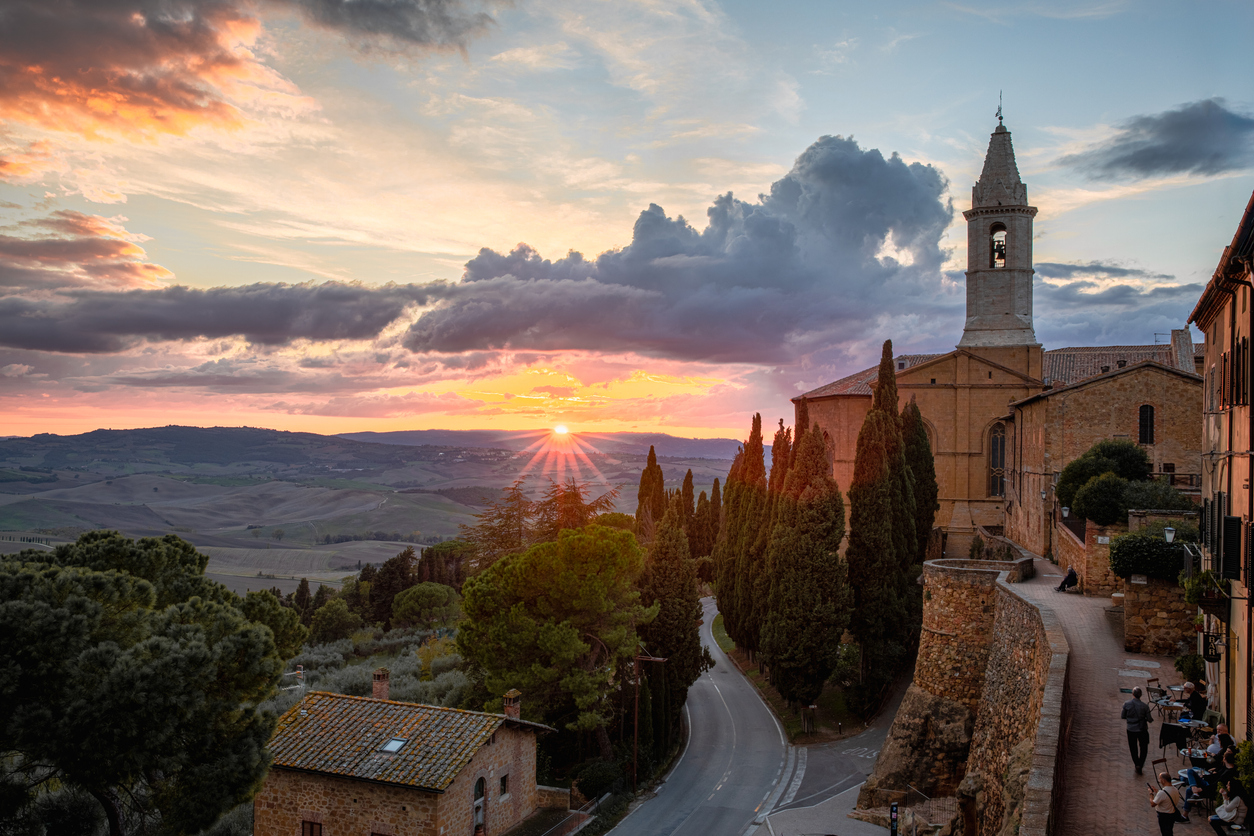
Siena and the Hill Towns. Siena's Piazza del Campo is one of Europe's finest medieval squares — the city's shell-shaped central space where the Palio horse race has been run twice annually, on July 2 and August 16, since 1659. Arriving early, before the midday crowds descend, with a guide who can explain the contrade rivalries that still animate everyday Sienese life, is a categorically different experience from joining the general flow. San Gimignano's 14 surviving medieval towers — all that remain of the original 72, once built by competing wealthy families as vertical declarations of status — are best seen from the fields below the town walls in morning light, when the silhouette is cleanest against the hill behind.
Wine in Montalcino and Montepulciano. Montalcino produces Brunello — 100% Sangiovese, aged for a minimum of four years before release, one of Italy's most structured and age-worthy wines. Montepulciano's Vino Nobile, one of the first four wines in Italy to receive DOCG status in 1980, blends Sangiovese with complementary varieties for a more immediately approachable character. Both are worth visiting in person; both are best understood in conversation with the people who make them. The private cooking class and the afternoon in a Montalcino cellar are not separate events — they are chapters in the same story of a region that has been feeding and pouring for people it cares about for a very long time.
April through June and September through October are the months Tuscany rewards most completely. The reasoning goes beyond crowd levels — though the reduction from peak summer is significant — and into what the landscape is actually doing at those times of year.
In spring, from April into early June, wildflowers line the strade bianche — the white gravel roads that connect the hill towns — and the vineyards carry new growth that turns the hills a vivid, improbable green. Temperatures are comfortable for walking through towns and across fields: 15 to 22°C through most of the season. The cities are lively without feeling overwhelmed, and the estates are beginning to welcome visitors after the quiet of winter.
September and early October are the harvest months, and for anyone drawn to wine and food culture, they offer something the rest of the year cannot replicate. The vendemmia — the grape harvest — begins in late August in warmer years and runs through September. Many estates welcome private visitors during this period, and the atmosphere is unlike anything you encounter in high season: the smell of fermentation from the cellars, the activity in the vineyards, the sense of a working agricultural landscape doing the thing it exists to do. The olive harvest follows in October, and truffle season is building toward its peak — white truffles around San Miniato and the Val d'Orcia from late September onward.
August is best avoided in most of Tuscany's interior. The heat in the hill towns is real — consistently above 30°C — and the cities absorb the full weight of summer tourism. Many of the best smaller restaurants and family estates close during August as the owners take their own holidays. If August is your only window, an itinerary built around early mornings, shaded courtyards, and evenings that begin at seven can still be rewarding — but the region is not at its best, and we will tell you that directly.
Florence is the natural gateway to Tuscany. From Florence Santa Maria Novella station, the high-speed Frecciarossa connects to Rome in 1 hour 35 minutes and to Venice in approximately 2 hours, making it straightforward to position Tuscany as the central chapter of a longer Italy itinerary. Most transatlantic visitors arrive into Rome or Milan and continue to Florence by train before beginning the countryside.
Within Tuscany, a private vehicle is the only practical way to reach the estates, the white roads, and the smaller towns that define a genuine Tuscany countryside experience. The train network connects Florence and Siena comfortably, but the Chianti hills, the Val d'Orcia, and most of the wine-producing territories between them are not train country. The roads were built for oxcarts on ridgelines and have not fundamentally changed since. A private vehicle — with your guide driving or directing — is the instrument the landscape requires.
The drive from Florence to Siena along the SR 222 Via Chiantigiana takes approximately 90 minutes without stops and is itself part of the experience: the road winds through Chianti Classico past Greve, Castellina, and Radda, with vineyard terraces and castle towers appearing around each bend. The faster route via the autostrada takes roughly an hour but misses everything the landscape has to say. On a private Tuscany tour, you take the scenic road.
For those arriving directly from a long-haul flight, we recommend at least one full recovery day in Florence before the countryside begins. A city morning with the Duomo or the Uffizi — visited calmly and unhurriedly, as they deserve — gives the body and mind time to arrive properly. Tuscany's pleasures are better absorbed when you are not still half elsewhere.
If you are planning a longer journey through central Italy, our Venice, Florence & Tuscany cultural tour connects Tuscany's countryside with the art cities of Florence and the canals of Venice in one seamless itinerary. For those drawn to the Ligurian coast as well, the Tuscan Charm & Cinque Terre adventure extends naturally from the Chianti hills to the five coastal villages of Liguria — two very different landscapes, one coherent journey.
Three days covers Chianti and one or two hill towns at a reasonable pace; five to seven days allows you to move between distinctly different areas — the vineyard roads of Chianti Classico, the UNESCO landscape of the Val d'Orcia, the medieval cities of Siena and San Gimignano — with enough room to actually settle into each place. A week in Tuscany alone is not too long. We design itineraries across all of these durations, and the pace and character of each is genuinely different.
September and October are our strongest recommendation: the grape harvest brings the estates to life in a way that no other season replicates, the weather is warm without the August heat, the crowds thin considerably, and truffle season is building. April through June is an excellent alternative — wildflowers, fresh green vineyards, and comfortable walking temperatures throughout. July and August are popular but hot, and the interior towns are at their most congested; if that is your window, we structure the itinerary around early mornings and cooler evenings.
Every itinerary is built from scratch, so what is included depends entirely on what you want. A typical private Tuscany experience covers private transportation throughout the region, a dedicated expert guide for your group alone, estate entrances and tastings, and any meals or cooking experiences built into the day. We manage all reservations, logistics, and timing. There are no set departure times, no other travelers in your vehicle, and no fixed route that does not match what you actually came here for. A discovery call with our team is the best way to understand what your specific Tuscany itinerary might look like.
Different answers for different drinkers. Chianti Classico is a varied category — you encounter everything from young, approachable reds to serious, age-worthy wines from the top estates, all built on Sangiovese with room for other local varieties. Brunello di Montalcino is 100% Sangiovese, aged a minimum of four years before release, and among the most structured and long-lived wines Italy produces. For the curious visitor who wants variety and accessibility, Chianti offers more ground to cover; for the serious wine traveler, an afternoon at a Montalcino estate — pouring wines that are not available outside the cellar door — is worth the detour south. We often include both in the same itinerary and frame them as a conversation between two expressions of the same grape across very different terroirs.
Every Italy Tour Company itinerary begins with a conversation. Tell us where you want to go, what matters most, and how you like to travel — and we will build something around that. No templates, no pressure, no obligation.
Schedule a complimentary discovery call with our team and take the first step toward an Italy experience that is entirely your own.
Schedule Your Discovery Call