
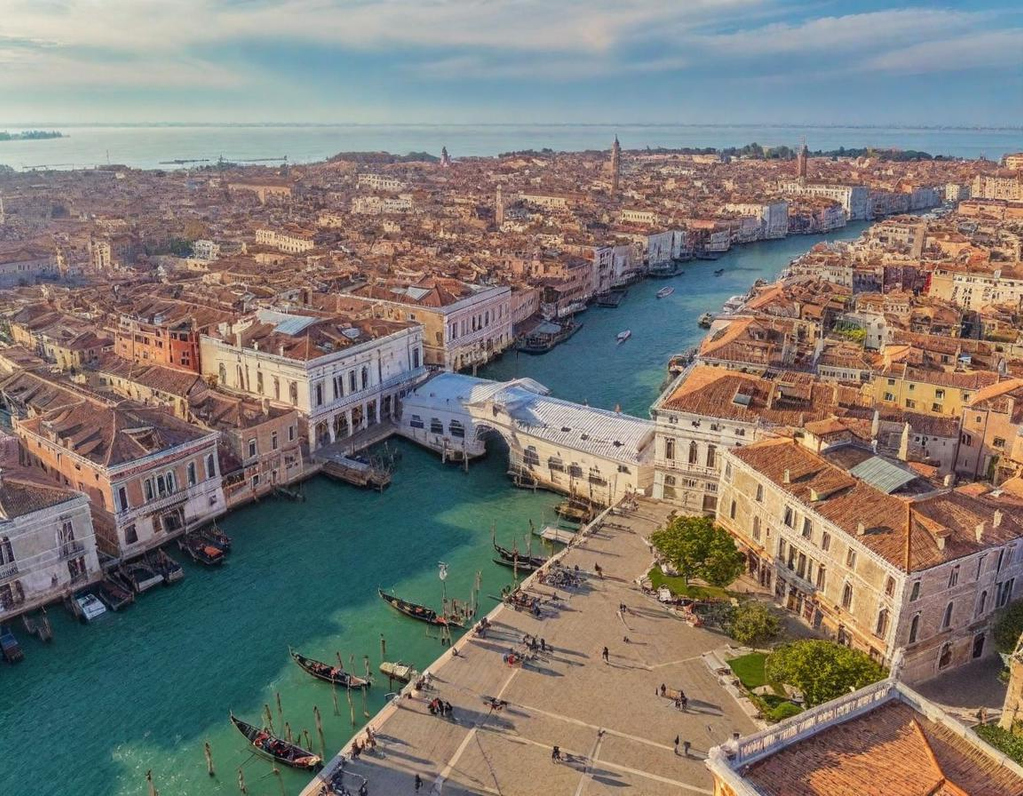
Venice is a city that cannot be adequately described—it must be experienced. Built across 118 small islands connected by approximately 400 bridges and 150+ canals, Venice exists nowhere else on earth. It is a place where the ordinary rhythms of city life are suspended, where you travel by water instead of street, where the past and present exist in constant, unsettling dialogue.
A private Venice tour is the only way to truly know this city. The masses arrive on cruise ships and move through St. Mark’s Square in herds, following colored umbrellas and listening to hurried explanations. When you travel privately, you can slip away into the quiet canals of Dorsoduro, visit the hidden courtyard at the Doge’s Palace where prisoners once walked their final steps toward the Bridge of Sighs, or sit with a glass of wine in a neighborhood bacaro (traditional Venetian bar) where no tourists have ever been.
Venice rewards the traveler who moves slowly and accepts the city’s refusal to be straightforward. Your private Venice tour is designed to be exactly that—a slow exploration of a city that has been shaped by water, trade, art, and an empire that once rivaled Rome itself.
Highlights
- ✦Priority access to St. Mark’s Basilica and the Doge’s Palace, connected by the Bridge of Sighs—the prison passageway built in 1600
- ✦Private gondola experience navigating Venice’s canals—the same Grand Canal at 3.8 kilometers long that has carried merchants and nobles for over a thousand years
- ✦Exploration of the Dorsoduro neighborhood—quieter, more residential, home to the Gallerie dell’Accademia and the Peggy Guggenheim Collection
- ✦Discovery of Venice’s artisan traditions—Murano glassblowing, lace-making on the island of Burano, and the mask-making heritage of Carnival di Venezia
Why a Private Venice Tour Makes the Difference
Venice is facing a crisis of mass tourism. The city receives over 25 million visitors per year—more people than its population—and the experience of Venice has been transformed into a series of crowded monuments and overpriced restaurants. A private Venice tour is a direct response to this reality. When you travel privately, your guide can take you to the San Giorgio Maggiore while most visitors are crushed into St. Mark’s Square. They can show you the neighborhoods where Venetians actually live—the Cannaregio, with its Jewish Ghetto established in the 1500s; the Castello, where workers and artisans have their homes; the Rialto beyond the famous market, where the real pulse of the city continues.
A private Venice tour also gives you access to the city’s artisan heritage. Murano glassblowing is not a tourist attraction; it is a living craft that has been practiced on the island of Murano since 1291, when the Venetian Republic moved glassmakers away from the wooden buildings of Venice to prevent devastating fires. You can visit a glass studio and watch an artisan heat and form glass in real time—a skill that takes years to master. On the island of Burano, you can learn about the tradition of lace-making (laccio, or lacework) that once made the island wealthy and is now practiced by a handful of dedicated artists.
Your private guide can also help you time your visit to avoid the worst crowds. The Grand Canal—that famous 3.8-kilometer-long waterway lined with Renaissance and Byzantine palaces—is best seen early in the morning, before the vaporettos (water buses) crowd the channel with tourists. St. Mark’s Basilica, with its 11th-century Byzantine mosaics covering 8,000 square meters, requires both an early arrival and a guide who knows how to direct your eyes to what matters. The Doge’s Palace, where Venice’s leader sat for nearly 1,000 years, tells the story of the Venetian Republic in its rooms, staircases, and decoration. Without a guide, you’re simply walking through old rooms. With a private guide, you’re understanding how power worked and how a maritime republic built an empire that rivaled Rome.

What to Expect on Your Private Venice Tour
You’ll begin in the early morning at the train station or airport, where your guide meets you at water level. The first moments in Venice set the tone—you’ll immediately understand that this is not an ordinary city. Instead of streets, you have canals. Instead of taxis, you have vaporettos and water taxis and gondolas. Your guide will help you navigate to your hotel, then begin to show you the city’s layers.
Your first formal experience might be a walk through St. Mark’s Square before the crowds arrive, when you can actually stand and look at the Basilica di San Marco—a structure built starting in 828 AD to house the remains of St. Mark, brought by Venetian merchants from Alexandria. The current structure is largely 11th century, covered in the mosaic work of Byzantine artisans and decorated with marble and treasures the Venetians collected from across their maritime empire. Your guide will help you understand how this basilica represents the height of Venetian power and the East-West cultural synthesis that made Venice unique.
From the basilica, you’ll move to the Doge’s Palace, connected to St. Mark’s by a passageway. Inside, you’ll see the rooms where the Doge conducted business, the staircase where visiting dignitaries were received, and eventually, the Bridge of Sighs—the white limestone bridge built in 1600 that connects the palace to the prison. Historians believe the “sighs” refer to the last view prisoners had of Venice before being imprisoned, though the true origin of the name is debated. Standing on this bridge, looking out at the canal where gondolas pass, you’ll feel the weight of history and the poignancy of a city that was once so powerful.
In the afternoon, you might take a private gondola ride through the smaller canals of Venice—not the crowded Grand Canal, but the quieter waterways where children call out to gondoliers they know, where laundry hangs from 500-year-old buildings, and where the real rhythm of Venice becomes apparent. A gondola moves slowly through water, which forces you to slow down as well—to look up at the windows, to notice the details of architecture, to understand what it means to live in a city where water is the primary thoroughfare.
You’ll spend time in the neighborhoods beyond the San Marco district. The Dorsoduro, on the opposite side of the Grand Canal, is quieter and more residential. It’s home to the Gallerie dell’Accademia, Venice’s most important art museum, with works by Venetian painters including Bellini, Carpaccio, Veronese, and Titian. You might also visit the Peggy Guggenheim Collection, housed in a 18th-century palazzo, and featuring modern and contemporary works in the context of Venetian architecture.
Best Time to Visit Venice
April through May and September through October are optimal for a private Venice tour. The weather is mild and pleasant, the light is clear, and while tourists are present, they are somewhat fewer than in July and August. You’ll still need to wake early and move strategically to avoid crowds, but the experience is far more comfortable than in the height of summer.
February brings Carnival di Venezia—a 10-day festival ending on Shrove Tuesday that transforms Venice into a masked, theatrical stage. The streets are filled with people in elaborate costumes, and the city reclaims some of its historical identity as a place of spectacle and excess. If you’re interested in experiencing Carnival, plan well in advance; hotels fill quickly and the energy is unlike any other time of year. Outside of Carnival dates, December through January offers a quieter, more atmospheric experience—the city is cool but not unpleasantly cold, and the reduced visitor numbers mean you can move through Venice more freely.
July and August should be avoided if possible. The heat is intense, the crowds are overwhelming, and the lines for major attractions can stretch for hours. If you must visit during summer, plan your museum visits for the earliest possible entry time and spend your afternoons in air-conditioned restaurants or resting in your hotel. Additionally, October through January is the season for acqua alta (high water), when Venice experiences tidal flooding, particularly in November. This doesn’t make Venice inaccessible, but it does affect which areas of the city are walkable.

Getting To and Around Venice
Venice is served by Marco Polo Airport (Aeroporto di Venezia), approximately 13 kilometers from the city center. International flights connect Venice to major European cities. From the airport, you can reach central Venice by water taxi, vaporetto (water bus), or airport shuttle bus that connects to the vaporetto system. Most travelers also fly into Milan or Rome and then take a high-speed train to Venice—a journey of approximately 3 hours from Rome and 3 hours from Milan.
Once in Venice, there are no streets, no cars, and no bicycles. The city is entirely car-free. Your only options for transportation are walking or traveling by water. Walking is the primary mode of movement—most areas of Venice can be reached on foot, though the maze-like layout of streets and alleyways means you’ll often feel lost, which is part of the Venice experience. A good map or a guide is essential.
For traveling longer distances or crossing canals, Venice has a vaporetto system—water buses that run set routes through the major canals. A single ride costs approximately 10 euros, and a day pass costs around 30 euros. Gondolas are available for hire and cost significantly more (around 100 euros for a short 30-minute ride), but they are an iconic experience and a quieter way to travel through the smaller canals. Your private guide will help you navigate transportation options based on your preferences and budget.
Frequently Asked Questions
How many days should I spend in Venice?
A minimum of three days is recommended for a private Venice tour. Two days allows you to see the major monuments and take a gondola ride, but three or four days permits you to genuinely know the city—to explore the neighborhoods, visit the artisan islands (Murano and Burano), spend time in the smaller museums, and simply sit and absorb the rhythms of Venetian life. Venice rewards slow travel.
Is Venice worth visiting in 2026? What about the mass tourism problem?
Venice is absolutely worth visiting, but the tourism crisis is real. The solution is to travel privately, to wake early, to stay in smaller hotels rather than large cruise-focused accommodations, and to spend time in the neighborhoods beyond San Marco. A private Venice tour specifically addresses these concerns by giving you insider access to the city away from the main tourist flows and helping you experience Venice as it actually exists rather than as a monument.
Which neighborhoods should I stay in?
Dorsoduro is excellent if you want a quieter, more residential feel while still being accessible to the major attractions. The Cannaregio (the Jewish Ghetto) offers history and a local atmosphere. The Rialto area is central to the city’s historic market. San Marco, while convenient, is the epicenter of tourism and crowding. Your private guide can recommend neighborhoods based on your preferences and help you book accommodations in areas that enhance your experience rather than undermine it.
Is a private gondola worth the cost?
A gondola is one of Venice’s most iconic experiences, but whether it’s worth the cost depends on your budget and interests. A private gondola (as opposed to a group one) costs roughly 100–150 euros for 30 minutes. If you have the means, it’s a memorable experience—the pace of a gondola forces you to slow down and observe details you might miss while walking. Public traghetto rides (gondola ferries that cross the Grand Canal) cost only a few euros and offer a similar experience without the romance or cost. Many visitors do both.
Explore More Private Italy Tours
Venice is often a highlight of a broader Italian journey. You might combine your private Venice tour with a private Lake Como tour or explore the full Northern Italy itinerary covering Milan, the lakes, Venice, and the Dolomites in one seamless journey. Or extend your time in the Veneto with visits to nearby cultural sites. Consider also pairing Venice with Florence and Tuscan countryside experiences for a comprehensive journey through Northern and Central Italy.
Start Planning Your Private Venice Journey
Every Italy Tour Company itinerary begins with a conversation. Tell us what you want from Venice—whether it’s the iconic monuments, the quieter neighborhoods, the artisan traditions, or simply the experience of moving through a city built on water—and we will design an experience around that. No templates, no pressure, no obligation.
Schedule a complimentary discovery call with our team and take the first step toward a Venice experience that is entirely your own.