
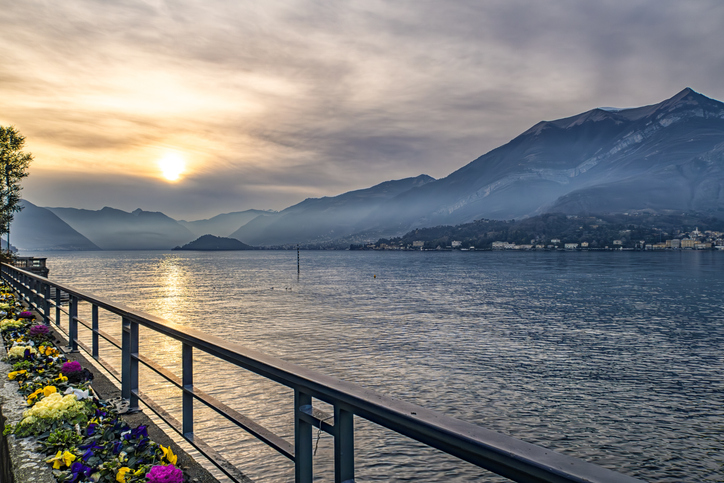
Lake Como is Italy’s deepest lake—146 meters of crystalline water fed by Alpine streams—and it is shaped like an inverted Y, with two arms creating a landscape where mountains plunge directly into water and elegant villas nestle into terraced gardens. A private Lake Como tour moves you through this geography at a pace that lets you understand why, for centuries, aristocrats, artists, and those seeking refuge have chosen to live on these shores. You will spend time in Bellagio, situated at the point where the two arms of the lake divide, or in Varenna, where the architecture is medieval and intimate and the permanent population of fewer than 800 residents means the village retains its character as a lived-in place. You will visit Villa del Balbianello, the 18th-century neoclassical palazzo that has served as a filming location for James Bond and Star Wars, or Villa Carlotta, with its 150 varieties of azaleas and rhododendrons blooming in spring. You will travel by private boat, by ferry, by car through the mountain villages above the lake, and on foot through the narrow stone streets of these communities where the pace of life moves slower than the mainland.
The distinction between a standard Lake Como visit and a private tour lies in access and understanding. Yes, you can ferry between villages and see the villas from the water. But a private Lake Como tour gives you knowledge of the history of these places. Villa del Balbianello, built in 1787 by Cardinal Angelo Maria Durini as a neoclassical masterpiece, is explained not just as a beautiful building but as a statement about taste and power in the 18th century. The fact that it has served as a filming location—for Casino Royale and for Attack of the Clones—tells you something about how the space photographs, how the light falls here, why filmmakers have chosen it. Villa Carlotta’s 150 varieties of azaleas and rhododendrons, many of them blooming in March through May, represent a deliberate cultivation effort spanning generations. A private guide gives you the language to understand these choices.
Italy Tour Company has developed relationships with private boat operators, villa owners, local historians, and proprietors throughout the Lake Como region. We understand that Bellagio and Varenna, though only a few kilometers apart across the water, have entirely different characters—Bellagio is the chic resort village with more restaurants and shops, Varenna is quieter and medieval and has retained more of its authentic character as a working lake community. We can arrange private or semi-private boats that give you flexibility not available on regular ferry schedules. We know which restaurants operate with a focus on quality and local tradition rather than volume. We can arrange visits to the villas at less crowded hours or in seasons when they are particularly beautiful—Villa Carlotta in late April and May when the azaleas are in peak bloom is a revelation. A private Lake Como tour is not just about seeing beautiful places; it is about understanding them deeply and moving through them with intention and knowledge.
Highlights
- ✦Villa del Balbianello—18th-century neoclassical masterpiece built by Cardinal Angelo Maria Durini, filming location for Casino Royale and Star Wars films
- ✦Villa Carlotta with 150+ varieties of azaleas and rhododendrons, featuring spectacular blooms in spring (March–May peak season)
- ✦Bellagio and Varenna village exploration—Bellagio as the chic resort hub and Varenna as the quiet medieval lakeside village with 800 permanent residents
- ✦Private or semi-private boat experiences on Italy’s deepest lake (146 meters) with scenic Alpine mountain views and water-based transportation between villages
Why a Private Lake Como Tour Makes the Difference
Lake Como’s character emerges from the interaction of water and steep Alpine terrain. The lake is 146 meters deep—deeper than most visitors expect for a freshwater lake in northern Italy—and this depth creates water of extraordinary clarity and color. The mountains rise directly from the shoreline, which means villages are built vertically, with houses stacked on top of each other following the slope of the terrain. This geographical reality has shaped everything about the Lake Como experience: why certain villas were built where they were, why transportation historically depended on the water, why these villages developed the character they have. A private guide helps you read this landscape. When you stand in Varenna, a guide explains that the town developed as a fishing village and working port, and even though tourism has arrived, it remains small (approximately 800 permanent residents) and retains that village character. When you visit Bellagio, you understand that it became the chic resort village because of its specific location at the meeting point of the two arms of the lake and because its geography allows for more level building and a true town center with shops and restaurants.
A private Lake Como tour also gives you access to the villas and gardens in ways that standard public access cannot match. Villa del Balbianello, built by Cardinal Angelo Maria Durini in 1787 as a neoclassical retreat, sits on a promontory with water on three sides and views back toward the lake and mountains. The building is a work of refined taste—the lines are clean, the proportions perfect, and it has become famous as a filming location for Casino Royale and for Attack of the Clones in the Star Wars prequel series. These films chose this location because the light photographs extraordinarily well, because the proportions of the spaces are perfect for cinema, and because it represents a certain European elegance. A private guide can speak to these qualities, can arrange your visit during less crowded hours, and can spend time explaining the architecture and the history. Similarly, Villa Carlotta, on the western shore, features gardens with 150+ varieties of azaleas and rhododendrons. These are not wild plants but deliberately cultivated specimens, many of them rare or unusual. The peak bloom occurs in late April and May, when the entire hillside above the lake becomes a composition in pink and purple. A private visit during peak bloom, arranged in advance with someone who knows the gardens, transforms the experience from a pleasant walk into an understanding of the botanical work and aesthetic intention behind the gardens.
The logistics of Lake Como are also handled seamlessly through a private tour. Regular ferries operate between the villages at scheduled intervals, and ferries are efficient and give you the local experience. But a private or semi-private boat offers flexibility: you can depart when you choose, move between villages without waiting for the next ferry, and potentially visit smaller locations or take a sunset cruise not available on regular routes. Your private guide coordinates this so you move between villages by the most logical and beautiful means for each segment of your journey. The villages themselves are accessed on foot—Bellagio and Varenna are not places for cars, and the narrow stone streets and steep stairs are best navigated slowly and deliberately. A private guide walks with you, pointing out details, telling you stories about the people who live in these places, leading you to restaurants and shops that reflect the actual community rather than the tourist infrastructure.

What to Expect on Your Lake Como Private Tour
Your Lake Como experience often begins with a choice of base. Many travelers choose to stay in Bellagio, the more substantial town, where restaurants and shops offer variety and where the central location makes access to other villages convenient. Others prefer Varenna, the quieter option, where the medieval character is more intact and where staying overnight means you can experience the village as the locals do—cooking at home or eating at family-run restaurants, walking the waterfront in the evening when day-trippers have departed. Both choices are valid, and your private guide will help you decide based on your temperament and interests. Some private tours divide the nights between the two villages, giving you time to understand both characters. Your guide meets you and orients you to your base village—the best viewpoints, the restaurants, the rhythm of the place. You walk the narrow streets, and your guide explains the history, the architecture, the way the village is organized vertically along the steep shore.
A morning or afternoon devoted to Villa del Balbianello becomes a profound experience when approached privately. The villa sits on a promontory with water surrounding it on three sides, and the approach by boat—even if you are arriving by car—gives you the same perspective that the villa was designed to be seen from. Your guide explains the building’s history: commissioned by Cardinal Angelo Maria Durini in 1787 and completed in the neoclassical style that was then current. The rooms are arranged to take advantage of views; the furniture and art speak to the cardinal’s taste and position. You learn that this is the place where the opening scenes of Casino Royale were filmed, and where certain scenes from Attack of the Clones used the interiors as a backdrop. These facts are not trivial; they tell you something about how filmmakers see the space, about the way it photographs, about its qualities of light and proportion. Your guide walks you through the terrace overlooking the water, and you sit for a time taking in the view. You understand, in this moment, why someone in the 18th century chose to build a retirement retreat in exactly this location.
Villa Carlotta, on the western shore, is experienced differently depending on the season. In spring (particularly late April through May), when the azaleas and rhododendrons are in peak bloom, a visit becomes an immersion in color and botanical knowledge. Your private guide knows the gardens intimately—can point out the rare specimens, explain the cultivation, speak to the work that goes into maintaining 150+ varieties. The experience is leisurely; you move through the gardens slowly, sitting on benches overlooking the lake, understanding the intentionality of the garden design. In other seasons, the focus shifts to the architecture and interior art, and to the views from the various levels of the gardens across the lake toward the mountains. Whether you visit Villa Carlotta in bloom season or not, the experience is about time and attention rather than efficiency.
A day devoted to exploring the villages themselves unfolds on foot. In Bellagio, you might walk from the town center (the Piazza) down to the waterfront, exploring the shops and restaurants along the way. You visit the basilica, a simple stone church that serves the local community. You walk out onto the peninsula where you can see both arms of the lake and the mountains beyond. In Varenna, the experience is more intimate. The village is smaller; the streets are narrower; the sense of being in an actual community is stronger. You walk along the waterfront, where fishermen historically kept their boats and where residents sit in the evening to watch the light change on the water. You explore the small piazza, the narrow streets that climb the hillside behind the village. You eat lunch at a restaurant that has operated for decades, where locals still come, where the pasta is made fresh daily. A private guide in Varenna might introduce you to a proprietor you befriend, or take you to a small shop or studio where someone who lives here creates something—ceramics, jewelry, art—and you leave with something specific to this place.
Your Lake Como private tour also includes movement by water. Regular ferries operate between the villages, and a private ferry ride or boat journey offers a different perspective. From the water, you see the villas on the shore, the way the mountains rise, the scale of the lake. A sunset boat ride on the lake, arranged privately, becomes a moment of contemplation. You might take an evening boat ride from your base to another village, arriving at dinner time, eating at a waterfront restaurant, and returning by night on the calm water. These boat journeys are not background logistics; they are part of the experience. They let you understand Lake Como as a water landscape, not just as a collection of villages to visit.
Throughout your time at Lake Como, you taste. The local cuisine emphasizes fresh pasta, often made with butter and sage, and fish from the lake—lavarello (a whitefish unique to the region), trout, and char are traditional. Your private guide knows restaurants that prepare this food with care and knowledge, places where the proprietor can tell you about the sources of the ingredients. You might have coffee and pastry in a cafe where locals gather in the morning. You taste wine from the small wine-producing region around Como. The pace of eating at Lake Como is leisurely; meals are not rushed, and conversation is as much a part of the experience as the food itself.

Best Time to Visit Lake Como
The ideal window for a private Lake Como tour is May through June and again in September through October. These months offer warm, stable weather, water that is swimmable (or at least not painfully cold), and light that is particularly beautiful in the late afternoon and early evening. May brings the first warmth and the greenery of spring in the gardens; Villa Carlotta’s azaleas and rhododendrons are often at peak bloom in late April and May, so May is an exceptional time for a villa-focused tour. June deepens this warmth, with longer days and water temperatures that are genuinely inviting for a swim. September arrives as summer heat begins to moderate, and the light becomes particularly golden. October offers stable weather and often the most beautiful light of the year, with lower humidity and clear skies. In both spring and autumn, the villages are populated by travelers who have chosen them deliberately rather than by families on school holidays or by large group tours. The restaurants are operating with full menus and staff, and the pace is more leisurely.
Summer (July and August) brings the warmest water and the longest days, making it ideal for swimming and water-based activities. However, this is also the most crowded time on Lake Como. The villages become busy with tourists, ferries are crowded, and restaurants shift toward serving larger volumes. The light can be hazy on particularly hot days. A private tour mitigates the crowding through advance arrangements and knowledge of less-crowded windows, but if your preference is a quieter experience with fewer fellow travelers, May or September is more rewarding. Many experienced travelers consider September to be Lake Como’s best month: warm enough, water still swimmable but fewer crowds, and exceptional light.
Winter (December through February) brings rainfall and cooler temperatures, and the water is no longer inviting for swimming. However, Lake Como in winter has its own character. Snow occasionally appears in the mountains, creating a dramatic backdrop. The villages are quiet—genuinely quiet, with most day-trippers gone. Restaurants serve simpler, more seasonal food. The light in winter is lower and more sculptural, which can be beautiful for photography and contemplation. Some of the villas may have reduced hours or close entirely during winter months, so a winter visit requires more advance planning. However, if you choose to visit during winter, you will experience Lake Como as a place rather than as a destination, and you will move through it with very few other travelers.
Getting To and Around Lake Como
Lake Como is 40 minutes from Milan by train—Trenord operates a regular service from Milano Centrale to Como city. From Milan airport, you can arrange a private transfer directly to your Lake Como accommodation, allowing you to rest and transition during the journey. Many travelers fly into Milan, spend a night or two in the city if they wish, and then travel to Lake Como. From Como city, your private transfer takes you to your village base—Bellagio or Varenna. From there, movement between villages is primarily by ferry or private boat, with shorter distances also navigable by car if you prefer.
Within and between the Lake Como villages, you move on foot for village exploration and by boat for transitions between villages. Regular ferry service operates every 30 minutes or so between the main villages during high season, and a private boat can be arranged if you prefer flexibility outside of ferry schedules. Your private guide coordinates all movement and transportation logistics, allowing you to focus on the experience. If you choose to combine Lake Como with other destinations, you might travel to the Dolomites for alpine landscapes, or return to Milan, or travel to other regions of northern Italy.
Frequently Asked Questions
How many days should I spend at Lake Como?
Two to three days is ideal for a Lake Como tour, allowing time to explore a village base, visit the villas, and move between locations without rushing. A single day allows you to see a village and one villa but gives limited time for contemplation. Four or more days allows for deeper exploration of the lake’s villages, hiking in the surrounding mountains, or a more leisurely pace. Italy Tour Company will help you design an itinerary based on your available time.
Should I base myself in Bellagio or Varenna?
Bellagio is more substantial and chic, with more restaurants and shops and a sense of it being a resort destination. Varenna is smaller and medieval, with approximately 800 permanent residents and a more authentic lake village character. If you want variety and nightlife, Bellagio is better. If you prefer quiet and authenticity, Varenna is the choice. Many private tours divide the stay between both villages—two nights in one, two nights in the other.
Should I take a day trip from Milan, or should I stay overnight?
A day trip from Milan is possible—the train ride is 40 minutes—but you will spend significant time in transit and will only touch the surface of Lake Como. Staying overnight allows you to experience the villages as they actually exist, to have dinner by the water, to walk the streets in the evening when day-trippers have left. A private tour of Lake Como includes at least one night on the lake, preferably two or three, to fully appreciate the place.
What is the best time to visit Villa Carlotta?
Villa Carlotta’s gardens are most spectacular in spring, particularly late April through May, when the 150+ varieties of azaleas and rhododendrons are in peak bloom. The gardens are open year-round, but spring is when they are truly spectacular. If visiting outside bloom season, the focus shifts to the architecture and the interior art. Your private guide will help you time your visit optimally based on your interests and the season you are traveling.
Explore More Private Italy Tours
Lake Como is often part of a broader exploration of northern Italy. A Northern Italy lakes, Milan, and Venice tour pairs Lake Como with other alpine lakes and Milan’s cultural attractions. If your interest is alpine landscapes, a private Dolomites tour offers dramatic mountain scenery and complements a lake-based itinerary. For those interested in combining water and culture, our best of Italy tour can incorporate Lake Como alongside other major destinations, or you might focus your entire northern Italy journey on the lake and surrounding regions.
Start Planning Your Private Lake Como Journey
Every Italy Tour Company itinerary begins with a conversation. Tell us where you want to go, what matters most, and how you like to travel—and we will build something around that. No templates, no pressure, no obligation.
Schedule a complimentary discovery call with our team and take the first step toward an Italy experience that is entirely your own.